

[] [] []
The portal is a dark omen. Its black frame is covered in oil and marked by ancient runic symbols that predict an unstable and bleak future contaminated by our refusal to move away from destructive habits.
Looking through the frame, one’s view of the river is obscured and distorted. It offers a glimpse into a hazy and toxic world dependent on fossil fuels and insidious petro-politics.
As denizens of this city we have many hard (and not-so-hard) choices to make in order to divert us from our current path towards a scorching, carbon-polluted dystopian nightmare.
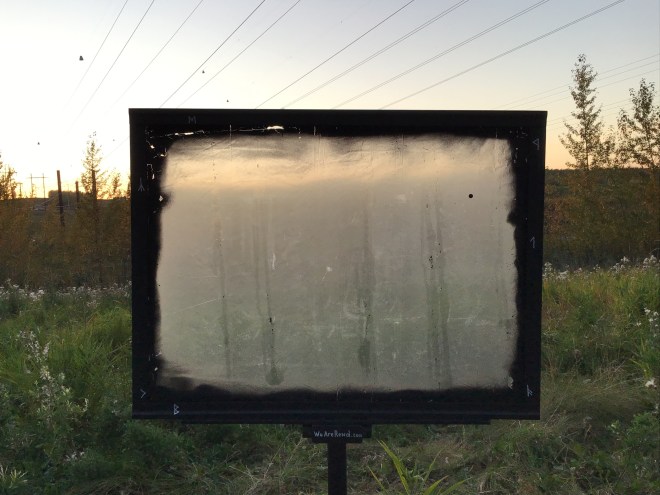
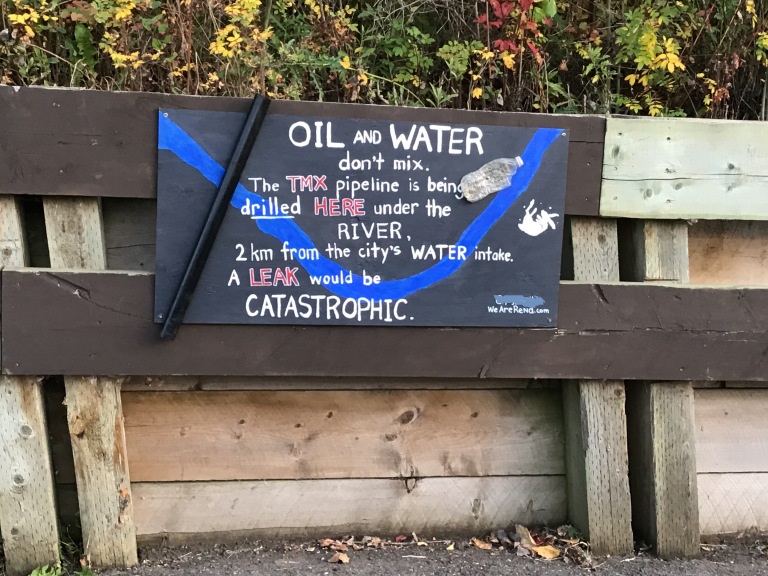
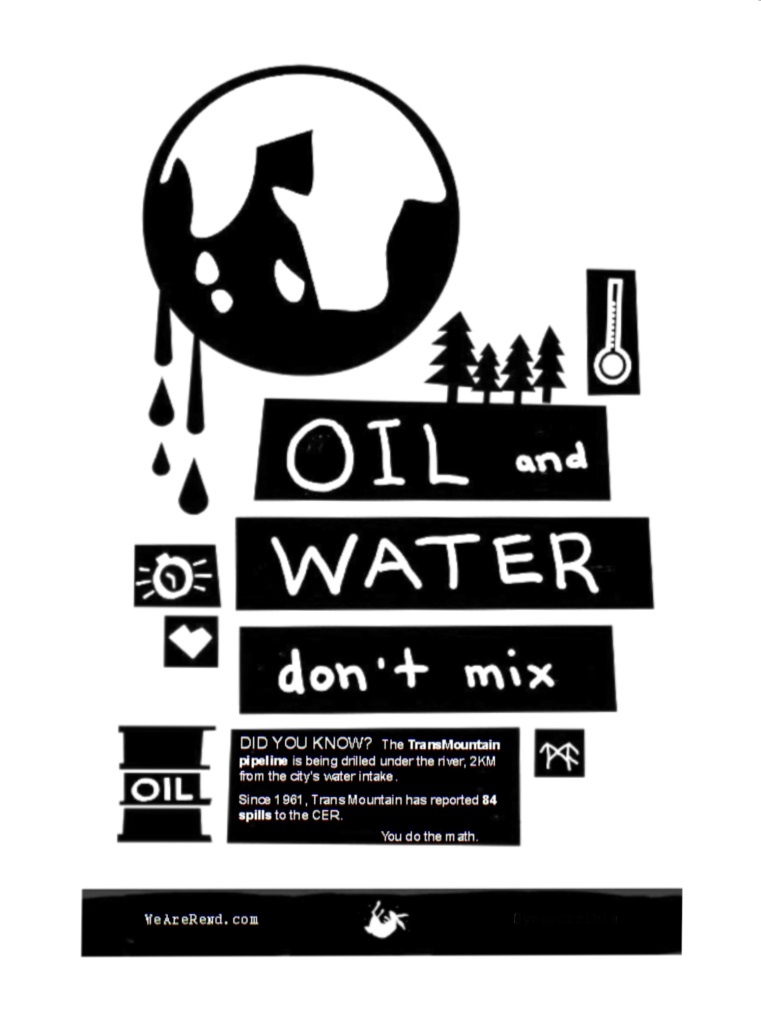
The controversial TransMountain (TMX) pipeline expansion is being drilled under the North Saskatchewan River, 2km upstream from the city of Edmonton’s water intake at the E.L Smith Water Treatment plant.
Since 1961, the Trans Mountain project has officially reported 84 oil spills. Oil and water don’t mix.
Many believe that the risks of an oil spill that contaminates our drinking water is too high a price to pay for hydrocarbons that need to be left in the ground. That is not the city we want our families to live in.
In 2016, the majority of the people who had addressed the Federal government’s ministerial panel on the Trans Mountain pipeline expansion spoke against the project.
The panel included economists and scientists who concluded that the pipeline expansion did not make sense for business nor the ecosystems that sustain human life.
- Weak oil demand forecasts leave economists wondering if TransMountain makes sense
- Why the Trans Mountain expansion’s business case may not be as solid as it appears
The troubled oil industry, already reeling from global overproduction and crushing debt, is now actively contracting. In October 2020, Cenovus and Husky, two of the five largest oilsands producers, just merged to save money by killing more than 2,000 jobs. Suncor axed another 2,000 employees. The so-called “economic engine of Canada” is shedding jobs, not making them.
David Hughes, one of the country’s foremost energy experts, puts is this way, in his latest report for the Canadian Centre for Policy Alternatives.
“The $12.6 billion the government plans to spend on the construction of TMX is counterproductive, as it is unlikely to increase the profits of Canadian producers or result in a revenue stream that will both cover construction costs and provide additional funds to reduce emissions in a meaningful timeframe.”
All non-corporate analysis has concluded that the taxpayer-owned TMX Is a bust.
Growing opposition to the pipeline expansion is also increasingly grounded in the science of carbon-induced planetary heating, and guided by the evidence that building additional pipeline capacity is bad for the planet and, ultimately, bad for Canada.
Expanding transport capacity via expanded pipeline infrastructure translates into expanded extraction, further locking in Canada’s dependence on the long-term development of the oil sands sector when we should in fact be planning the phasing out of this carbon intensive industry.
The world’s scientific community is in agreement: the planet is heating rapidly due to the human uses of greenhouse gases.
- Scientific Consensus: Earth’s Climate is Warming (NASA)
- Summary for Policymakers of IPCC Special Report on Global Warming
One of the primary sources of the greenhouse gas emissions causing escalated warming is carbon. We are filling our atmosphere with carbon. The result is a rapidly heating planet that is becoming more and more ecologically unstable. Fires, droughts, rising coastal tides, and mass extinctions driven by warming temperatures are already well-documented.
- Historical overview of climate change science
- Scientific and academic research on the impacts of climate change
In order to mitigate the many severe problems with an overheated world, we need to reduce and drawdown the massive amounts of carbon pollution in the atmosphere. To do this we have to urgently transition to new energy sources. To pretend otherwise amounts to climate change denialism.
For too long, we have been held prisoner by the rhetoric and manipulations of those who would prevent an economically beneficial energy transition in order to personally profit. As people who care about our families and the world we live in, we have to work together to transition NOW, not later.
We are the generation who have to choose to embrace new ways of living and being, or choose a harsh and chaotic future that could bring suffering to those we love, as well as millions of other people we don’t even know.




 REND
REND 
One Comment